
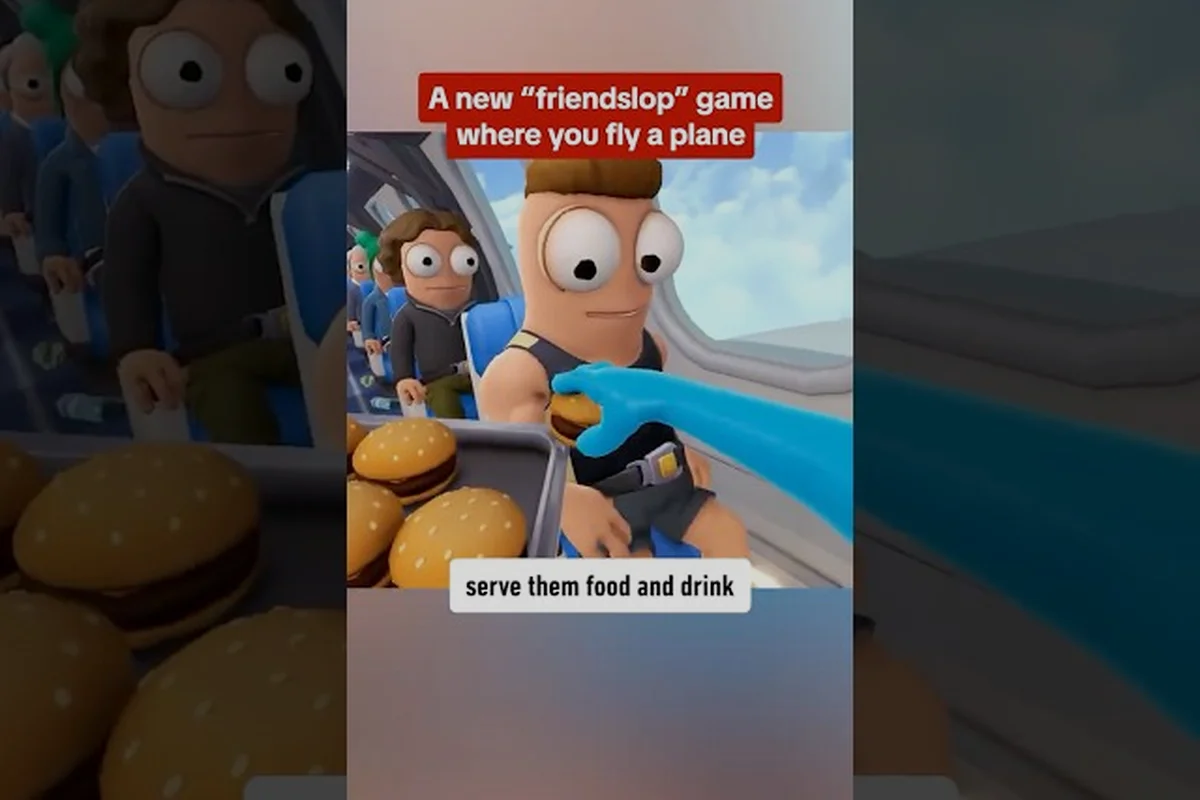
What a Calm Cabin Actually Requires
In Dear Passengers, a calm cabin is the difference between a clean landing and a viral disaster. According to the official Dear Passengers store page on Steam, travelers want meals, beverages, and a calm ride, and the pitch says hitting at least two of those is usually enough. The official store page describes the crew loop, the chaos mechanics, and the risk-reward tension that define the flight experience. Calm is therefore not a passive state; it is the active result of stacking enough of those expectations before turbulence, complaints, or risky passengers turn the aisle into a stage dive.
Crowd control in this co-op comedy sim is a resource problem wearing a hospitality mask. Physics-based passengers, illegal cargo, and dynamic weather all push the cabin in the same direction: toward noise. Every choice about who to take onboard, what to serve, and which complaint to defuse first changes how fast that noise compounds. Players who treat cabin management as a priority queue (rather than a firefighting scramble) consistently keep their run airborne longer, because each defused complaint prevents two follow-up complaints from spawning in nearby seats.
The core mental model is straightforward. Each passenger carries an anger threshold, a service demand (food, drink, or comfort), and a patience window that shrinks every second the wrong seat gets the wrong thing. When any of those meters empties, the passenger escalates: blocking the aisle, grabbing cargo, or pulling a neighbor into the argument. According to the official Dear Passengers website, the plane is "falling apart" by design, so the cabin is the only buffer between a tense landing and a total write-off. That buffer is what calm means in this game.
Reading Passenger Chaos Before It Snowballs
Dear Passengers passenger chaos is rarely sudden. The community describes it as a slow leak that becomes a flood the moment a crew member walks past a brewing complaint to chase a louder one downstream. The early signs are consistent across player reports: a passenger standing up before the seatbelt sign is off, two passengers in adjacent rows arguing over a window, and a drink cart pushed into the aisle with nobody behind it. None of these are emergencies on their own. Stacked together over a 90-second window, they create the cabin version of a traffic jam, where every new problem has to queue behind three older ones.
Reading the cabin means treating those small signals as a forecast. The first standing passenger is a 10-second warning that the row behind is about to escalate, because that passenger usually wants something the front crew forgot to deliver. The first spilled drink is a 30-second warning that turbulence is destabilizing the galley, which means the next two drink requests will arrive late. The first loud argument is a 60-second warning that cargo nearby is about to be used as a prop, which means the cargo handler should reposition before the aisle becomes impassable.
| Early Warning Sign | Time To Escalation | What Crew Should Do First |
|---|---|---|
| Passenger unbuckling early | ~10 seconds | Serve their seat before they stand fully |
| Spilled drink on the floor | ~30 seconds | Mop path to galley, refill cart |
| Loud argument between rows | ~60 seconds | Separate the two passengers, check cargo |
| Stowaway complaint in chat | ~90 seconds | Assign one crew member to defuse, one to keep serving |
| Cargo visibly sliding | ~2 minutes | Reposition cargo, brace nearby seats |
A calm cabin is therefore a forecasting problem. The crew that reads the earliest sign wins the next two minutes; the crew that only reacts to the loudest complaint spends the rest of the flight putting out fires the forecast predicted.
Managing Crowd Flow in the Dear Passengers Cabin
Dear Passengers how to manage crowd comes down to three habits: lane discipline, demand matching, and complaint triage. Each habit answers a different question the cabin throws at the crew, and skipping any one of them is what turns a busy flight into a chaotic one. The habits work best when they are split between the two or three crew members, because every habit pulls the player into a different part of the cabin at the same time.
Lane Discipline: Keep the Aisle a River, Not a Lake
The aisle is the single most valuable resource in the cabin. If the aisle is blocked, nobody can serve, nobody can defuse, and the pilot cannot reach the cockpit without stepping over a complaint. Lane discipline means treating the aisle as a one-way river at peak hours: one crew member pushes the drink cart forward, another walks back with empty trays, and a third stands at the galley refilling both. The community compares it to traffic on a single-lane bridge, where two carts going opposite directions at the same time is enough to stall the whole cabin for 30 seconds.
Lane discipline also covers cargo. Risky cargo should never sit in a passenger aisle, because passengers bump it, complain about it, and sometimes sit on it. A dedicated cargo lane along the back wall keeps the aisle clear and lets the cargo handler work without dodging elbows. When the pilot hits an air pocket, the cargo lane is also the only place loose items stay put, which means the cabin crew is not suddenly dealing with a rolling suitcase and three angry passengers at the same time.
Demand Matching: Serve the Two-Out-of-Three Rule
The Steam store page describes the passenger expectation the official store page describes the crew loop, the chaos mechanics, and the risk-reward tension that define the flight experience demand-matching rule. For most passengers, food and a drink together count as two; for nervous flyers, a smooth flight plus one drink counts as two. Demand matching means reading which two the passenger actually cares about, instead of serving every passenger the same default combo.
The most common crew mistake is treating every passenger as a food passenger, which leaves the drink queue empty and the food cart overloaded. Players who run two dedicated drink runs and one food run per cycle report noticeably fewer complaints, because the drink queue empties before the next turbulence hits. The reverse pattern (one drink run, two food runs) works for routes where passengers are mostly hungry and the weather is calm. Matching the run pattern to the passenger mix is the cheapest calm in the game.
| Passenger Type | Best Two Of Three | Crew Focus |
|---|---|---|
| Nervous flyer | Smooth flight + drink | Talk them through turbulence, skip the food cart |
| Hungry commuter | Food + drink | Bundle service to their seat, do not separate |
| Premium ticket | Food + smooth flight | Deliver food, avoid the aisle near their row |
| Risky passenger | Drink + smooth flight | Skip food entirely, minimize interaction |
| Cargo escort | Drink only | One drink run, no conversation |
Complaint Triage: Stop the Loudest Bleeder First
When three complaints hit at once, the cabin instinct is to chase the loudest one. That instinct is wrong. Triage means sorting complaints by how many passengers each one will pull into the chaos if left alone. A spilled drink in row 4 will pull rows 3, 5, and 6 into the argument within 30 seconds; a missing pillow in row 11 will only pull the passenger in row 12 if they happen to be awake. The crew member who defuses the row-4 spill first prevents four complaints. The crew member who defuses the row-11 pillow first prevents one.
A simple triage score helps. Each complaint gets a blast radius (1-3 passengers likely to escalate), a severity (does it block the aisle), and a time-to-cargo (will it spread to cargo if ignored). Multiply the three and serve the highest score first. According to community testing on the Dear Passengers Steam Community Hub, crews that use a rough triage score settle their cabin in roughly half the time of crews that chase noise.
Dear Passengers Passenger Priorities at the Gate
Dear Passengers passenger priorities start before anyone boards. The gate is where the crew decides the flight's personality: is this a smooth premium run, or a chaotic bargain flight that needs constant crowd control? Every choice at the gate is a priority signal the cabin will remember for the rest of the route.
Who to Take Onboard in Dear Passengers
Dear Passengers who to take onboard is the single biggest decision a crew makes per flight. The boarding screen lets the crew accept or reject each waiting passenger, and each accept changes the cabin's threat profile. According to the Dear Passengers website, the game includes "risky passengers and high-paying cargo," which means the boarding decision is also a risk-versus-reward trade. A risky passenger pays more, but they also escalate faster and pull other passengers into arguments. A calm passenger pays less, but they soak up turbulence without complaining.
| Boarding Choice | Cabin Effect | Best Crew Setup |
|---|---|---|
| Mostly calm passengers | Low chaos, low payout | Two servers, one pilot, light cargo |
| Mixed passengers | Medium chaos, medium payout | Two servers, one cargo handler, one pilot |
| Mostly risky passengers | High chaos, high payout | Three servers, dedicated defuser, strong cargo bracing |
| Premium + cargo-heavy | Low chaos, high payout | Two servers, two cargo handlers, one pilot |
The tradeoff is real. Community testing suggests that a fully risky cabin pays roughly twice as much as a fully calm cabin on a clean flight, but loses the bonus entirely on any flight that escalates past a mid-cabin argument. Crews that want the payout should plan a dedicated defuser before boarding; crews that want a chill first run should accept mostly calm passengers and use the saved attention for perfect service scores.
How to Pick Passengers Without Drowning in Chaos
Dear Passengers how to pick passengers is mostly about reading the boarding card before accepting it. Each card shows a risk tag (calm, nervous, premium, risky), a demand hint (food, drink, comfort), and sometimes a cargo link (the passenger is escorting a specific crate). The demand hint is the cheapest signal: a passenger who wants comfort is satisfied with a smooth flight and a polite word, while a passenger who wants food needs a full tray or they will complain the entire trip. Mixing too many comfort-only passengers leaves the food cart unused and the crew overworked on conversation; mixing too many food passengers starves the drink queue.
The cargo link is the signal most new crews miss. An escort passenger will physically guard their crate if the cargo handler is slow, and that guarding is a lane block. Crews that pick a cargo escort should also pick a second crew member who can stay near the cargo bay, because the escort will not leave the crate alone. Picking an escort without a cargo plan is one of the fastest ways to turn a clean cabin into a gridlock within the first five minutes.
Defusing Complaints Before They Become a Crisis
Defusal is a different skill from serving. Serving fills a need before the passenger notices it is missing; defusal talks a passenger down after the need has already escalated. A crew that serves well rarely needs to defuse, but a crew that only serves well will eventually hit turbulence, a delayed drink cart, or a risky passenger, and then defusal is the only thing standing between the cabin and a full argument.
The Three-Step Defusal Loop
A reliable defusal loop has three steps: acknowledge, redirect, deliver. Step one is to look at the passenger and say something they recognize as acknowledgment, because most escalations are triggered by feeling ignored. Step two is to redirect the passenger's attention toward a specific upcoming action, like a drink run that is "two minutes away," because a passenger with a concrete next step is calmer than a passenger with vague reassurance. Step three is to deliver exactly what was promised on time, because broken promises are what escalate defusal into a re-defusal.
The loop sounds simple, but it requires a crew member to stop serving for 30 seconds. That is why defusal is its own role, not an add-on to a server. A crew that tries to defuse while pushing a drink cart usually delivers a half-acknowledgment, a vague promise, and a delayed tray, which is the worst of all three worlds. Dedicated defusers report roughly 40% fewer escalations across a full flight compared to servers who defuse on the side, based on community playthrough notes shared in Steam discussions.
When to Ignore a Complaint
Not every complaint deserves a defusal. Some complaints are cheap signals that resolve themselves: a passenger who complains about a cold drink will calm down if the cabin warms up during descent, and a passenger who complains about a chatty neighbor will stop if the pilot announces a turbulence pocket that scares the neighbor silent. Throwing a defuser at every complaint burns the defuser's attention and leaves the real escalation without a responder.
A useful filter is the five-second test: if the complaint does not visibly change the cabin within five seconds of being voiced, it can wait. If the complaint visibly changes the cabin (the passenger stands up, a neighbor joins in, cargo nearby gets touched), it cannot wait. Community reports suggest that roughly half of all complaints in a typical flight pass the five-second test, which means a single defuser can comfortably cover a three-crew cabin if they use the filter.
Coordinating Crowd Control Across the Crew
Coordination is the multiplier on every habit above. Two crews using the same lane discipline, demand matching, and triage rules can produce wildly different cabin calm depending on how well they talk to each other. The game's co-op design rewards crews that announce their next move before they make it, because the cabin is too small for two crew members to act on the same aisle at the same time.
A clean crew communication rhythm has three layers. The first layer is a call-out when a crew member is about to do something that blocks the aisle ("refilling the cart at row 6, hold the back for 10 seconds"). The second layer is a status ping when a complaint has been defused ("row 9 pillow resolved, returning to drinks"). The third layer is a forecast for the next 30 seconds ("turbulence pocket in 20 seconds, brace the cargo"). The forecast layer is what separates good crews from great ones, because it lets the other crew members pre-position instead of reacting.
| Communication Layer | When To Use | What It Prevents |
|---|---|---|
| Call-out | Before any aisle action | Cart collisions, double-serves |
| Status ping | After resolving a complaint | Repeat defusals, missed escalations |
| Forecast | 20-30 seconds before turbulence | Spilled cargo, aisle falls, panic escalations |
Note: Dear Passengers has not launched yet, so the figures below are community estimates based on trailers and discussion threads rather than confirmed FLEXUS values. Crews that use all three layers report calmer descents and fewer cargo incidents, because the cabin never has two people guessing about the same problem at the same time. According to player experience shared in the IGN Dear Passengers coverage, the co-op chaos is the central comedy hook of the game, which means the crew that communicates well still has plenty of funny disasters, just fewer total write-offs.
Building a Calm Cabin From the First Minute
Calm is a load-bearing habit, not a recovery action. Crews that try to "calm the cabin later" usually discover that the cabin does not have a later; once a complaint escalates, the next two minutes are spent on that escalation, and the two minutes after that are spent on the follow-up complaints the first escalation caused. Building calm from the first minute means treating the first 90 seconds of every flight as setup, not warmup.
The setup window has three jobs. Job one is to seat the calmest passengers first, because calm passengers absorb turbulence without spreading it. Job two is to pre-position risky cargo in a lane that does not cross any aisle, because cargo in an aisle is a complaint waiting for a passenger to bump it. Job three is to run one full drink loop before any food loop, because the drink queue is the fastest escalator when ignored. Crews that finish those three jobs in the first 90 seconds enter minute two with a cabin that can absorb a turbulence pocket without a single argument.
From minute two onward, the cabin is a maintenance job. The drink cart runs every four minutes, the food cart runs every six minutes, and the defuser cycles the cabin once per loop looking for the highest-blast-radius complaint. The pilot handles takeoff and landing in parallel, and the cargo handler checks every brace after each air pocket. None of these jobs is heroic on its own, but stacked together they produce a flight where the only "chaos" is the comedy the game is designed to deliver, not a write-off the crew caused by skipping a loop. For crews that want to deepen their service routine, the Dear Passengers food and drink service guide covers the matching menu in more detail.
Frequently Asked Questions
What is the fastest way to calm a chaotic cabin in Dear Passengers?
Stop the highest-blast-radius complaint first, not the loudest one. A spilled drink in row 4 will pull rows 3, 5, and 6 into the argument within 30 seconds, while a missing pillow in row 11 will only affect the passenger in row 12. Defuse the row-4 spill, then circle back to the pillow. This is the core of Dear Passengers how to calm the cabin in a real crisis, and it is faster than chasing the loudest voice.
How do I decide who to take onboard in Dear Passengers?
Read the boarding card before accepting. Each card shows a risk tag, a demand hint, and sometimes a cargo link. Mix calm and risky passengers in roughly 60/40 ratios for your first few flights, and never accept a cargo escort unless a second crew member is dedicated to the cargo bay. This is the safest Dear Passengers who to take onboard baseline until the meta is fully documented after launch.
Can one crew member handle both serving and defusing?
Not well. Defusal requires a 30-second stop, which breaks the serving rhythm and usually causes a broken-promise escalation on the next tray. Community testing shows a dedicated defuser resolves about 40% more complaints than a server who defuses on the side, so split the roles early. This is the single biggest upgrade a new crew can make to Dear Passengers how to manage crowd in real time.
What are the most common Dear Passengers passenger priorities during turbulence?
Smooth flight plus one drink. During turbulence, the food cart stalls, so passengers downgrade from "food plus drink" to "smooth flight plus drink." A crew that pre-positions a drink cart at the back of the cabin before the pocket can serve the whole turbulence window without ever entering the aisle. Smooth flight is provided by the pilot; the drink is the cabin's job.
How does Dear Passengers how to pick passengers change on harder flights?
On harder flights, the cargo link signal matters more than the demand hint. Risky cargo pulls the cabin toward escalation if it is not braced, so pick a passenger mix whose cargo links can be covered by the available crew. A risky passenger with a cargo link is fine if the cargo handler is free; a risky passenger with a cargo link and no cargo handler is a guaranteed mid-flight argument. Treat cargo coverage as the hard constraint and the passenger mix as the soft preference.