
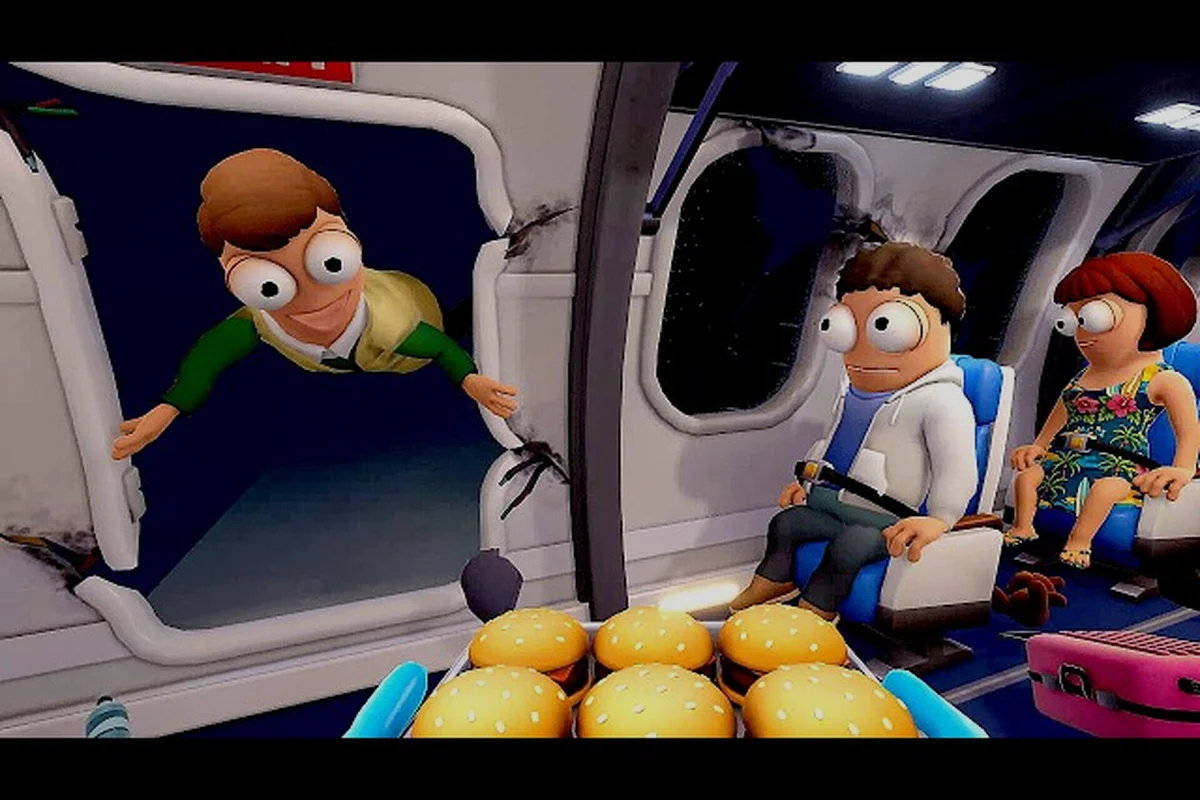
Dear Passengers hands the cockpit to one player and the cabin chaos to everyone else, and the moment a cloud rolls in, the co-op contract gets stress-tested. According to the Dear Passengers on Steam store page, the game features dynamic weather, turbulence, and air pockets as core challenges. This Dear Passengers weather guide breaks down every condition shown in the official trailers and confirmed on the store page, so the pilot and cabin crew walk into each flight knowing what the sky is about to throw at them.
Dear Passengers Weather Systems Overview
The co-op sim from FLEXUS Games leans into a single core idea: a cheap airline where nothing works, and the sky is actively trying to make it worse. The official Dear Passengers official website describes the game as "the world's worst airline," and the dynamic weather loop is what makes that pitch feel honest.
What the Store Page Confirms
The Steam store page lists dynamic weather, turbulence, and air pockets under KEY FEATURES, placing them alongside risky passengers and high-paying cargo. That means weather is not background dressing — it is one of the main pressure systems the crew has to manage every flight. Players confirmed on the Steam community discussions that weather interacts with both the pilot's controls and the cabin's physics, which is why both roles feel the consequences of a bad front.
| Weather System | Where It Hits | Primary Risk |
|---|---|---|
| Turbulence | Cabin and cargo | Loose items, spilled drinks, panicking passengers |
| Air Pockets | Pilot inputs and cabin floor | Sudden altitude drops, physics chaos |
| Rain | Visibility and grip | Reduced flight precision, slippery cargo |
| Wind / Crosswinds | Pilot steering | Off-center flight path, hard landings |
| Storms | Everything | Compound effects of all other systems |
Why Weather Matters for Co-op
Because one player flies and the rest work the cabin, weather forces a communication channel that the game otherwise encourages players to ignore. When the pilot banks hard through a gust, the cabin crew has to brace, secure cargo, and calm down passengers at the same time. The trailers linked from IGN's Dear Passengers game page repeatedly show chairs sliding, luggage bouncing, and crew members getting tossed around the aisle, which lines up with the store description of physics-based cabin chaos.
Dear Passengers Turbulence Explained
Turbulence is the most frequently mentioned weather system in Dear Passengers marketing, and it shows up in the announcement trailer almost as often as the airline jokes. It is the baseline shaking effect that never fully goes away on a long flight.
What Triggers Turbulence
According to the official wording, turbulence is part of the dynamic weather layer that the game continuously simulates. In practice, community testing on the Steam discussion boards (149+ threads as of September 2026) suggests that pilots trigger turbulence by flying through marked cloud zones, holding an unsteady altitude, or pushing the throttle too aggressively. None of these trigger values have been confirmed by FLEXUS, so they are best treated as community observations until the developer publishes tuning notes.
How Turbulence Affects the Cabin
The cabin feels turbulence first. Unsecured cargo slides, drinks spill, and passengers lose patience faster than they do in calm air. The store page notes travelers want meals, beverages, and a calm ride, and the pitch says hitting at least two of those is usually enough means a turbulent cabin can single-handedly tank your service score if the cabin crew cannot keep things level.
| Turbulence Intensity | Cabin Effect | Pilot Effect |
|---|---|---|
| Light | Minor item sliding, mild drink spills | Slight stick wobble |
| Moderate | Cargo shifts, passengers brace | Steering drift, altimeter jitter |
| Heavy | Loose items airborne, passenger panic | Strong control pull, hard altitude swings |
For a deeper look at the cabin side of these systems, the dear passengers how to avoid crashes guide breaks down how turbulence cascades into full-blown disasters when left unchecked.
Dear Passengers Air Pockets: How to Survive Drops
Air pockets are the second pillar of Dear Passengers weather, and they are the one most likely to break a smooth flight in a single second. The store page calls them out by name, which means they are a distinct system rather than just "more turbulence."
What an Air Pocket Does
An air pocket is a sudden loss of lift that drops the plane without warning. The pilot's instruments spike downward, the cabin floor briefly becomes unreliable, and anything that is not strapped down will leave the surface. Because the effect is sharp rather than sustained, air pockets punish crews that have been coasting through easy skies.
Dear Passengers How to Avoid Air Pockets
The exact avoidance method is not yet confirmed by FLEXUS, but community reports from beta playtests describe three defensive habits that seem to reduce how often air pockets ruin a run, and the reasoning behind them ties directly to how Dear Passengers simulates weather cells and pilot load: darker cloud tops are believed to indicate high-vapor pockets that displace lift the moment the aircraft crosses them, and easing the throttle gives the simulated airframe a wider reaction window before the altimeter starts to fall, which is why the most consistent beta-test runs paired horizon scanning with a smooth power reduction.
-
Keep an eye on the horizon markers ahead of the plane — clouds with darker shading tend to flag pockets before the pilot flies into them.
-
Throttle back slightly when entering a visually dense cloud bank, because full-throttle entries appear to deepen the drop.
-
Brief the cabin crew before any risky cloud so they can brace cargo and warn seated passengers.
None of these are officially documented avoidance rules from FLEXUS, so treat them as community-reported best practices until a patch notes document confirms them — meaning the three habits above (horizon scanning, throttle easing, cabin crew briefings) currently sit in the same gray zone as anecdotal tips like reducing the altimeter-trigger window or bracing cargo before dense cloud banks, and only an official Dear Passengers patch notes entry would elevate them to confirmed mechanics within the weather simulation.
Dear Passengers Storm Guide: Weather Conditions Ranked
Storms are the headline scenario in Dear Passengers because they stack every other weather system into one miserable flight. The storm guide below ranks the conditions by how much chaos each one adds, based on the official feature list and trailer evidence.
| Condition | Severity (Community Estimate) | Confirmed By |
|---|---|---|
| Clear Skies | Baseline | Steam store page, trailers |
| Rain | Low–Moderate | Trailer visuals |
| Wind / Crosswinds | Moderate | Trailer visuals |
| Turbulence | Moderate–High | Steam store page |
| Air Pockets | High | Steam store page |
| Severe Storm | Extreme | Trailer cutscenes |
The Dear Passengers storm guide effectively says: if you can survive the first three calmly, you have a chance at the back half. If the crew is already arguing about loose cargo when rain starts, a storm will finish the flight in under a minute.
How Storms Stack Effects
A severe storm in Dear Passengers appears to combine sustained turbulence, multiple air pockets, and crosswinds into a single layered event. The community believes — though this is not yet confirmed — that storms also reduce visibility enough to limit the pilot's ability to dodge bad cloud zones, which is why experienced crews start preparing for the worst the moment the sky darkens.
Dear Passengers Weather Survival Tactics for the Whole Crew
Surviving Dear Passengers weather is not a solo pilot problem. The co-op design forces the cabin to react in lockstep, and the best crews build a shared vocabulary before they ever take off. The Dear Passengers how to survive turbulence playbook below condenses the most repeatable habits from community testing.
Pilot Responsibilities
-
Read the sky early. Bank around dark cloud banks instead of through them, because each avoided zone is one less air pocket to eat.
-
Smooth the throttle. Jerky throttle inputs are widely reported to worsen turbulence intensity, though exact tuning is unconfirmed.
-
Call out weather changes. A two-second warning to the cabin lets the crew brace cargo and warn passengers before things slide.
Cabin Crew Duties in Rough Air
-
Pre-secure cargo. Any high-paying cargo that breaks loose in a pocket is a direct payout loss, so straps go on during calm air, not during a drop.
-
Serve drinks early. Because turbulence makes serving harder, getting drinks out before a forecast pocket keeps the service score from collapsing.
-
Watch passenger patience. The store page confirms that "not every passenger stays onboard," and rough weather is when jumpers get bold.
For a broader set of habits, the dear passengers weather survival tips guide pairs well with this one and goes deeper on crosswind handling, including how to time a turn onto the active runway when gusts exceed 18 knots and why late flap deployment is the most common cause of bounced landings in the dear passengers weather guide's storm scenarios.
How Weather Interacts With Co-op Roles
Dear Passengers is built around online co-op, and weather is the part of the loop that punishes role confusion the hardest. The pilot cannot brace a passenger, and the cabin crew cannot dodge a cloud. When a front rolls in, every player needs to own their slice of the crisis.
Communication Beats Reaction Time
Because weather effects often hit faster than a human can react, crews that call out conditions before they hit perform noticeably better than crews that react after. The community frequently cites simple callouts like "pocket ahead," "wind shift," and "storm front" as the difference between a recoverable bump and a runway divorce. This is not an officially published tip, but it lines up with how the co-op design pushes players to share information.
The Dear Passengers Turbulence Guide Mindset
The Dear Passengers turbulence guide mindset is to assume the worst and plan down. Pilots fly smoother than they need to, cabin crew secures cargo before it asks to be secured, and the whole crew treats every cloud like it might be a pocket. The trailers from FLEXUS and IGN show that the game rewards crews that stay ahead of the weather rather than crews that try to recover from it, which is why the calm-air habits matter more than the panic habits.
For pilots who want a tighter look at avoiding the worst cloud zones entirely, the dear passengers how to avoid storms guide layers altitude changes and wind shear handling on top of this one.
Frequently Asked Questions
What is the Dear Passengers weather guide covering?
This guide covers every Dear Passengers weather system confirmed on the official Steam store page and visible in the trailers: turbulence, air pockets, rain, crosswinds, and severe storms. It explains what each condition does to the pilot, the cabin, and the cargo, so the whole crew knows what to expect before takeoff.
How do you survive turbulence in Dear Passengers?
Pilots smooth their throttle and steer around darker cloud banks, while cabin crew secures loose cargo and serves drinks before turbulence peaks. Because passengers expect "at least two of three" things from the store description, keeping service steady in rough air is half the survival strategy on its own.
What exactly are air pockets in Dear Passengers?
Air pockets are sudden drops in lift that the Steam store page calls out as a core weather feature. They hit the pilot's controls with a sharp downward pull and turn the cabin floor unreliable for a second, which is why crews brace cargo before flying into any visually dense cloud.
Can you avoid air pockets in Dear Passengers?
There is no officially confirmed avoidance method yet, but community playtesters report that reading the sky ahead, throttling back into cloud banks, and warning the cabin in advance all reduce how often pockets ruin a run. Treat these as community-reported habits until FLEXUS publishes tuning notes.
How bad are severe storms in Dear Passengers?
Severe storms stack turbulence, air pockets, and crosswinds into one event, and the trailers show crews getting completely overwhelmed when unprepared. The Dear Passengers storm guide recommendation is to build calm-air habits first, because the crews that survive the back half of a storm are the ones that handled the front half calmly.