
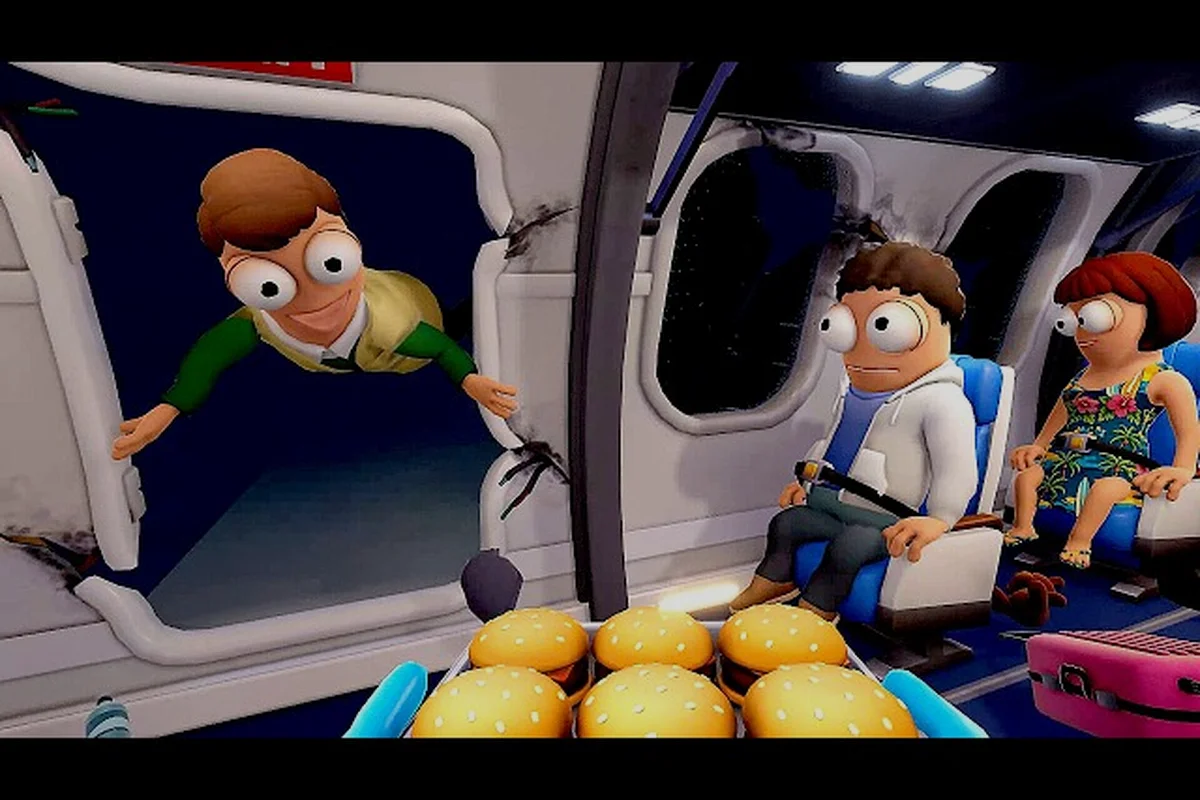
Dear Passengers is built from the ground up as an online co-op comedy sim, so figuring out how to play with friends is the first question every new crew asks before the wheels go up. FLEXUS's upcoming airline disaster simulator drops one player into the cockpit while everyone else scrambles through the cabin, and getting that crew assembled quickly is the difference between a smooth takeoff and total airborne pandemonium. This guide covers the dear passengers how to play with friends workflow end to end, including lobby setup, role assignment, and the kind of coordination that keeps your plane in one piece.
Because the game is currently listed as TBA 2026 on the Dear Passengers Steam store page, some specifics (like exact matchmaking UI labels) are still subject to change. What we know for certain comes from the official store description, the Dear Passengers official website, and the verified trailers hosted by IGN. Everything below is built on those sources, with community discussion referenced where the developers have not yet pinned down a final answer.
Dear Passengers Player Count and Lobby Basics
The first thing any friend group needs to settle is the dear passengers player count, because the role split is hardcoded into how the game distributes responsibilities. The store page describes Dear Passengers as a "co-op comedy sim" where "one player pilots the plane while the rest keep the cabin together," and the official announcement trailer reinforces that the cockpit is reserved for a single player per session. There is no solo mode currently listed in the key features, so the multiplayer crew is the intended way to play.
How Many Players Does Dear Passengers Support?
The Steam listing does not publish a maximum lobby size, but the trailer and key features both frame the experience as a small-team game. Community discussion on the Steam Community Hub suggests players expect a tight crew size, with most threads treating three to four players as the comfortable sweet spot for keeping everyone busy without tasks going stale. The dear passengers how many players question does not yet have a developer-confirmed cap, so treat the upper bound as "small enough that every role has a job" rather than a fixed number.
| Crew Size | Pilot Coverage | Cabin Workload | Coordination Difficulty | Best For |
|---|---|---|---|---|
| 2 players | 1 pilot, 1 hybrid cabin/pickup | Heavy on the second player | Low (constant voice chat needed) | Quick sessions with a single buddy |
| 3 players | 1 pilot, 2 dedicated cabin crew | Balanced, clear role split | Moderate (natural call-and-response) | Standard friend group |
| 4 players | 1 pilot, 3 cabin crew | Comfortable, allows specialists | Low (more hands, less rush) | Full friend squad |
| 5+ players | 1 pilot, 4+ cabin crew | Some idle time likely | Lowest per player, but watch for crowding | Larger groups comfortable with self-direction |
For most groups, three or four is the safest starting point because the dear passengers pilot role and the three cabin crew slots line up almost exactly with that headcount — one pilot at the helm and the remaining players covering passenger pickups, route announcements, and emergency calls without anyone standing idle. The smaller the crew, the more each player matters, and the easier it is to learn the dear passengers crew roles without overlap on the same task; drop below three and the lone cabin player ends up juggling pickups and announcements at once, while pushing past four starts producing idle hands, since only one pilot slot exists and excess players queue for the same cabin duties. This is why the table above marks 5+ as "watch for crowding" rather than a recommended tier.
Setting Up the Lobby Step by Step
The exact lobby UI has not been fully revealed yet, but the store description and key features point to a straightforward online co-op flow. Based on the verified trailers and FLEXUS's marketing, expect the following pattern when the game ships:
-
One player hosts a session from the main menu and becomes the default pilot slot
-
The host invites friends through Steam's standard overlay or shares a session code
-
Joining players are dropped into the cabin and can pick up crew duties immediately
-
Voice chat is handled externally (Discord or in-game, depending on the final build)
Players asking about split-screen co-op will find no confirmation of local couch play in the store key features, and a Steam Community discussion thread explicitly asks the developers about it without an official answer yet. For now, plan on online multiplayer with one device per crew member.
Dear Passengers Crew Roles Explained
The dear passengers crew roles system is the heart of the game, and understanding it is the single biggest factor in how well your friend group performs. The store page draws a clear line between the person in the cockpit and the people keeping the cabin from descending into total chaos, and each role carries a different mental load.
The Pilot Role and What It Demands
The dear passengers pilot role is the only seat with a fixed responsibility split. The pilot handles the actual flying: keeping the aircraft pointed in the right direction, managing altitude, responding to dynamic weather, turbulence, and air pockets, and reacting to whatever the cabin crew radioes up. According to the Steam store description, the plane is already "falling apart" at baseline, which means the pilot's job is less about smooth aviation and more about preventing cascading failure.
Beyond just flying, the pilot role demands constant situational awareness of the aircraft's structural state, because the plane's falling-apart baseline turns every flight into a resource-management puzzle where ignoring a warning light for ten seconds can snowball into a crisis the cabin crew has to triage mid-flight.
-
Continuous attention to flight instruments and the route
-
Communication with cabin crew on passenger and cargo issues
-
Reaction to dynamic weather events (turbulence, air pockets)
-
Cargo weight awareness, since the store copy flags "high-paying cargo" that is implied to be risky
The pilot cannot leave the cockpit for long stretches, so the cabin crew has to be self-sufficient during takeoff, landing, and weather events. A good pilot calls out upcoming turbulence early, which gives the cabin time to brace passengers and secure loose items.
The Cabin Crew Role and What It Demands
The dear passengers cabin crew role is the larger, more reactive side of the crew. The store description puts it bluntly: travelers want meals, beverages, and a calm ride, and the pitch says hitting at least two of those is usually enough developers encourage crews the official store page describes the crew loop, the chaos mechanics, and the risk-reward tension that define the flight experience members handle serving, keeping passengers seated, dealing with cargo that shifts during turbulence, and intervening when "not every passenger stays onboard" (the developers' way of hinting that disruptive or even dangerous passengers can appear mid-flight).
Key demands of the cabin crew seats: Because cabin crew is the seat that touches the most moving parts of a flight, it asks the most of any one player when the dear passengers crew is small — and the workload compounds fast if you do not split tasks. A solo cabin crew player has to juggle drink service, cargo physics, passenger mood, and emergency response in a single shift, which is why most guide strategies recommend running at least two cabin crew seats in any crew over three players so that a "two of three" service target from the developers is actually achievable under turbulence.
-
Running food and drink service while monitoring passenger mood
-
Responding to in-flight emergencies (fires, medical issues, disruptive passengers)
-
Managing physics-based cargo that can shift, topple, or break loose
-
Communicating to the pilot when cabin conditions require course changes
Cabin crew is also the role that benefits most from role specialization in larger crews. One player can focus on beverage service while another watches cargo, and a third handles passenger disputes. Without that split, a small crew ends up ping-ponging between tasks and missing events.
Choosing the Best Crew Setup for Your Friend Group
The dear passengers best crew setup depends entirely on how your group communicates and how forgiving you want the early learning curve to be. The key features list is short, but it gives enough signal to build a recommended role distribution before launch.
Recommended Role Splits by Group Size
| Group Size | Pilot | Cabin Crew 1 | Cabin Crew 2 | Cabin Crew 3 (if present) |
|---|---|---|---|---|
| 2 players | Host (experienced player) | Hybrid cabin/servicing role | - | - |
| 3 players | Most communication-comfortable player | Service and passenger focus | Cargo and emergency response | - |
| 4 players | Calmest under pressure | Beverage and food service | Cargo security | Passenger disputes and emergencies |
| 5+ players | Designated pilot who likes the yoke | Specialized beverage server | Specialized cargo manager | Service runner + flexible backup |
A common mistake in early sessions is letting the most vocal friend grab the pilot seat. The pilot role rewards calm, forward-looking play, while cabin crew rewards rapid task-switching. Match the seat to the personality, not to seniority.
Why the Pilot Should Almost Always Be the Host
Across the verified trailers, the host is consistently the player shown in the cockpit. That is not a hardcoded rule in the store description, but the natural lobby flow places the host at the front of the aircraft. Treat it as a default unless FLEXUS confirms otherwise closer to launch. If your group wants a non-host pilot, plan to test that during the upcoming beta windows that the Steam Community discussions hint at.
Dear Passengers Best Co-op Practices and Coordination Tips
Crew composition only gets you halfway. The dear passengers how to play with friends workflow depends on how the crew actually talks to each other once the boarding door closes. The store description leans hard into "physics-based passengers, cargo, and cabin chaos," which means every shift, every dropped tray, and every unsecured crate is a potential chain reaction.
Communication Habits That Prevent Mid-Air Meltdowns
When the pilot, cabin crew, and cargo handler all stay silent, passenger events snowball into cascading failures because no one owns the warning chain — a loose luggage warning at row 12 ignored for ten seconds becomes a mid-cabin spill, blocks a galley door, and delays the next turbulence call. The store page lists three to four player co-op, so every shift literally has only the crew you brought on board, and once the pilot is locked into an instrument approach there is no hand-off to absorb a missed call. Building a few verbal habits — naming the event, repeating the seat zone, and confirming before moving on — is the difference between a recoverable scare and a full route reset, especially with the game's dynamic weather forcing rapid escalation windows that no single player can monitor alone.
-
Use a call-and-response pattern: cabin reports an event, pilot acknowledges, both move on
-
Call out turbulence windows at least 30 seconds before they hit so cargo can be braced
-
Assign zone ownership (forward galley, mid cabin, cargo hold) so two crew members never run to the same emergency
-
Pre-agree on a "drop everything" signal for catastrophic events like a fire or a breach
The store key features call out "dynamic weather, turbulence, and air pockets" as explicit threats, which means weather is the most common trigger for cascading failures. The crew that talks about weather before it arrives handles the event; the crew that reacts after the fact is already cleaning up.
Role Flexibility When Things Go Wrong
Even a well-planned dear passengers best crew setup will break down once a high-risk passenger starts a fight or a high-paying cargo crate cracks open. Players asking about the dear passengers best crew setup in community threads consistently recommend a "primary plus flex" structure: each crew member has a main job, but everyone knows enough about the other roles to step in for 30 seconds when needed.
In practice, that means the pilot should know how to call for help over voice chat even if they cannot leave the seat, and the cabin crew should know which cargo crates are highest priority (the ones marked as "high-paying" in the store description, since those tend to be the dangerous or illegal ones the official website alludes to). When the cabin crew has to abandon a beverage cart to deal with a disruptive passenger, someone else has to be ready to pick up the slack.
For deeper hosting-specific details (port forwarding, server browser behavior, and invite troubleshooting), the Dear Passengers hosting guide covers the technical side in more detail — including how a host's NAT type (Open, Moderate, or Strict) directly determines whether friends see the lobby on the server browser, and why UDP port 27015 must be forwarded on most home routers before Steam invites resolve correctly across the two-to-four-player sessions the dear passengers player count supports.
Common Beginner Mistakes in Dear Passengers Co-op
The store description and official trailers telegraph a lot of the failure modes, and Steam Community discussions echo the same concerns from players who have watched the trailers closely. Avoiding these patterns early is what separates a crew that lands the plane from one that evacuates onto the wing.
| Mistake (from trailers / store copy) | Trailer / source clue | Concrete in-flight failure it produces | Quick crew-side fix |
|---|---|---|---|
| Pilot tabs out to handle a passenger dispute | FLEXUS trailer (XRvd_HZesys) cuts from yoke to cabin argument mid-climb | Yoke unattended → drift into the air pockets and turbulence called out on the Steam store page | Pre-assign a dedicated flight attendant before takeoff; pilot stays on instruments |
| Treating cargo as static | Steam KEY FEATURES: "physics-based … cargo" | Unsecured crates shift during turbulence, blocking the aisle mid-service | Strap cargo before boarding; one crew member owns the cargo hold each leg |
| Skipping the "two of three" service rule | Store copy: travelers want meals, drinks, and a calm ride | Missed drink rounds snowball into angry passengers mid-flight | Assign a cabin runner who owns the service loop each leg |
| Stacking too many crew in one galley | IGN Announcement Trailer (_LZEReb2Ymk) shows four crew piled at the back | Forward cabin un-monitored; troublemakers deplane unnoticed | Spread one crew per zone (cockpit, mid, rear) on every shift |
| Assuming every passenger stays onboard | Steam store: "not every passenger stays onboard" | Crew surprised by a removal event mid-flight, losing a service slot | Pre-brief who handles removals and who covers their cabin duties |
-
Letting the pilot multitask on cabin issues: the yoke is the pilot's whole job during flight, and tabbing out to handle a passenger dispute ends badly
-
Treating cargo as static: the store copy calls out "physics-based" cargo specifically, which means unsecured crates will move during turbulence
-
Ignoring the "two out of three" service rule: passengers want food, drinks, and a smooth flight, and the developers explicitly say crews should aim for two
-
Stacking too many crew in one zone: even with four players, the cabin is small, and crowding one galley leaves the rest of the plane unattended
-
Forgetting that some passengers will not stay onboard: not every passenger is a paying customer, and the cabin crew has to be ready to remove troublemakers mid-flight
The dear passengers how to play with friends question is really a question about coordination under pressure, and these mistakes are the ones the early trailers keep showing for comedic effect. The crew that laughs about them on the first flight is the crew that learns from them by the third.
For a broader look at the cabin workflow (serving, mood management, and the actual passenger service loop), the Dear Passengers cabin crew guide breaks down the day-to-day of life in the back of the plane.
Frequently Asked Questions
Can I play Dear Passengers solo?
The official Steam key features describe Dear Passengers as an online co-op experience with a clear pilot-versus-cabin-crew split, and there is no solo mode listed. You can technically join a public lobby alone, but the game's design assumes at least two players, with three or four being the typical sweet spot. Plan on rounding up at least one friend before launch.
How do I invite friends to a Dear Passengers lobby?
The host starts a session from the main menu and invites friends through the Steam overlay or a shared session code, per the verified trailers. FLEXUS has not published a final UI screenshot yet, so the exact button labels may shift before launch, but the invite flow is expected to use Steam's standard multiplayer handshake. The Dear Passengers teamwork guide covers invite patterns and role assignment once your crew is in.
What is the difference between the pilot role and cabin crew role in Dear Passengers?
The pilot flies the plane, manages altitude, reacts to weather and turbulence, and communicates with the cabin. Cabin crew handles passenger service, food and drink runs, cargo security, and emergency response in the back of the aircraft. The roles are designed to be complementary, because the pilot cannot leave the cockpit and the cabin crew cannot steer the plane.
How many players can join a Dear Passengers session?
FLEXUS has not confirmed a hard cap yet, but the official store description and trailers frame the game as a small-team experience with one pilot and a handful of cabin crew. Community discussion on the Steam Community Hub treats three to four players as the comfortable norm, with larger groups possible but harder to keep busy. Treat the upper bound as whatever the launch build allows, but expect a tight crew.
Does Dear Passengers support split-screen or cross-platform play?
There is no confirmation of split-screen co-op in the key features, and a Steam Community thread specifically asks FLEXUS about it without an official answer. Cross-platform play has not been announced either, so plan for PC-only online multiplayer until the developers confirm otherwise. The Dear Passengers hosting guide tracks these details as more information lands.