
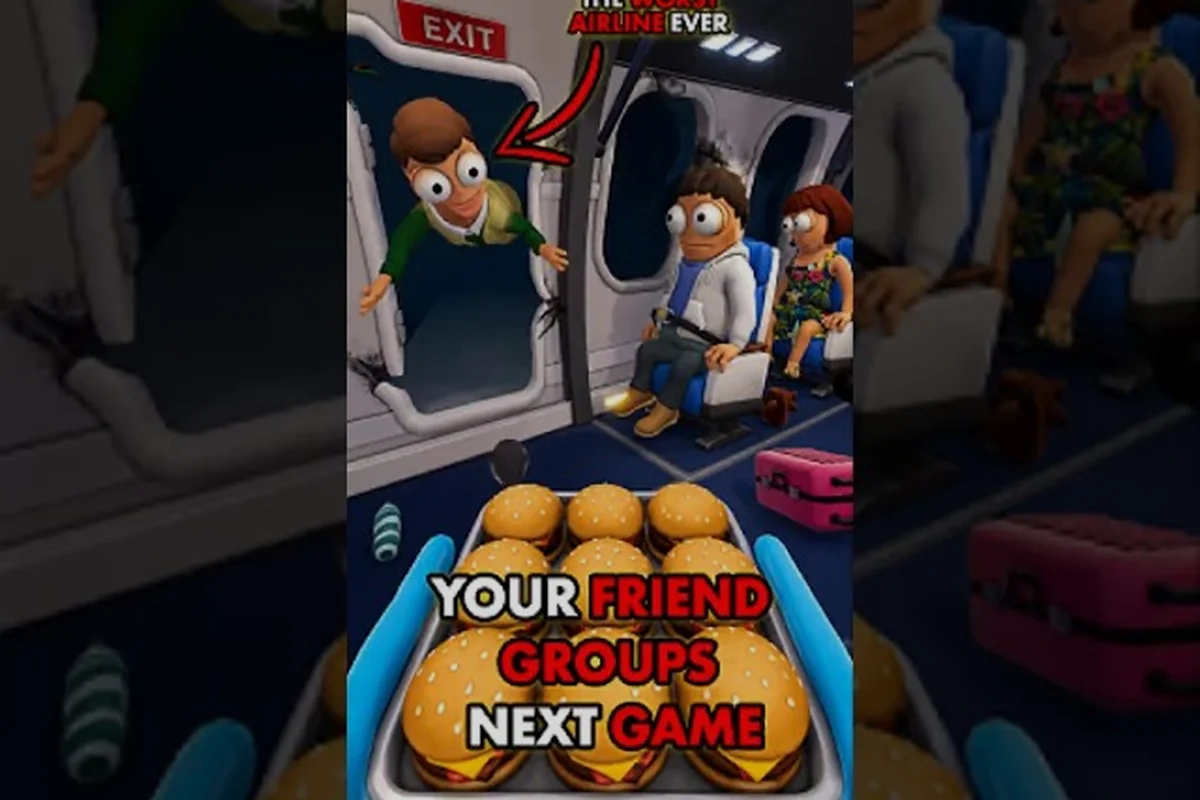
A solid Dear Passengers teamwork guide starts with one uncomfortable truth: this is a co-op game where one player flies the plane while everyone else scrambles to keep the cabin from imploding, so loose coordination turns a comedy flight into a full-blown disaster before takeoff. FLEXUS's online co-op comedy sim, slated for a 2026 release on Steam (app 4534960), splits the crew into roles that only succeed when people actually talk to each other, and that is exactly the gap this guide fills. With a co-op chaos template this rigid, even seasoned flight crews will fumble their first few cargo loads, so brush up on the role basics and radio etiquette in our Dear Passengers how to play with friends walkthrough before you queue up.
Why Dear Passengers Forces Real Teamwork
Dear Passengers is not the kind of co-op game where two strangers can coast through a session on autopilot. According to the official Steam store page, the game splits responsibilities between a single Pilot and the rest of the Cabin Crew, with the cabin side juggling physics-based passengers, illegal cargo, dynamic weather, and air pockets that can flip a smooth flight into a slapstick emergency. The Pilot handles takeoff, landing, and mid-air surprises, while everyone else keeps the plane from falling apart on the ground side — and the only way the loop works is through active coordination between the two halves.
This split is what makes the Dear Passengers teamwork guide different from generic co-op advice. You are not just "playing together"; you are dividing a fragile system of interlocking tasks, where one crew member dropping a tray of drinks into a turbulence pocket can cascade into a passenger riot that the Pilot has to compensate for. Players who treat the roles as interchangeable almost always hit a wall at the first rough air pocket, because the cabin chaos is designed to demand role-specific attention.
The game's design philosophy, as described on the Dear Passengers official website, leans into "the world's worst airline," meaning the chaos is the point. Community discussions on the Dear Passengers Steam Community Hub have already flagged coordination as the single most common pain point in pre-release playtests, with players asking about voice chat, lobby flow, and how to recover when a teammate goes down mid-flight. The takeaway: in Dear Passengers, the teamwork loop is the game, and players who invest in coordination tools before the first flight will consistently outperform those who wing it.
| Crew Role | Primary Zone | Core Responsibility | Coordination Trigger |
|---|---|---|---|
| Pilot | Cockpit | Takeoff, landing, weather calls | Voice line to cabin before turbulence |
| Cabin Crew A | Front cabin | Passenger service, tray runs | Calls "turbulence incoming" overhead |
| Cabin Crew B | Rear cabin | Cargo, security, overflow passengers | Flags loose cargo before Pilot banks |
| Cabin Crew C | Galley | Food, drinks, emergency supplies | Restocks cabin stations on request |
Setting Up Your Dear Passengers Lobby
The lobby is where every Dear Passengers teamwork guide has to start, because a poorly set up session leaks coordination problems before anyone has even boarded. According to the verified Steam store page, Dear Passengers supports online co-op with a small crew, and the dev team at FLEXUS (based in Tel Aviv, reachable at contact@flexus.games) has framed the experience around friends hopping into a private session rather than matchmaking with strangers. The Dear Passengers invite friends flow is built around Steam's friend list, which means getting your party together in the right order matters more than it does in games with built-in matchmaking browsers.
Before anyone touches a keybind, the host should make a few decisions that shape the entire run. The host picks the flight route, sets the difficulty modifier, and decides whether the lobby is open to late-joiners — three choices that quietly determine how much coordination work the crew will need to do once airborne. Players in the community discussions have repeatedly asked about late-join and drop-in behavior, which suggests the dev team is still tuning this, so the safest pre-flight habit is to lock the lobby once the crew is set and avoid mid-flight disruptions.
| Lobby Setup Step | What to Do | Why It Matters for Teamwork |
|---|---|---|
| 1. Host opens lobby | One player creates a private session | Sets the rule-set for the entire flight |
| 2. Invite from Steam friends | Use the in-game friend list, not raw Steam invites | Keeps party on the same build and region |
| 3. Confirm crew count | Match lobby size to the role plan below | Avoids orphan roles with no backup |
| 4. Pick role loadout | Assign Pilot + cabin roles before launch | Prevents scramble at first turbulence call |
| 5. Lock when full | Disable late-join via lobby settings | Stops random players disrupting the rhythm |
The Dear Passengers lobby guide workflow above is the same one veteran co-op players use in games like Overcooked and PlateUp, and the same logic applies: a lobby that looks "casual" on the surface is actually a coordination contract, and the contract needs to be signed before the first match. If your group wants a quick test flight, keep the lobby at 2–3 players and stick to one Pilot and one or two cabin crew; if you want the full chaos loop, run the maximum crew size and spread the cabin tasks across more hands.
Dear Passengers Role Assignment Strategy
The heart of the Dear Passengers role assignment system is the split between the Pilot and the Cabin Crew, and choosing who plays which role is the single highest-leverage decision your crew will make all session. The Pilot is the only player who can keep the plane in the air, respond to weather events, and execute the landing, so this role needs someone who can stay calm under pressure, call out incoming turbulence, and resist the urge to panic-bank the aircraft when a tray of drinks goes airborne in the back. The Cabin Crew, by contrast, is a multi-headed hydra of small tasks: serving food and drinks, managing risky passengers, wrangling high-paying cargo, and patching up the small problems before they snowball.
A common mistake new crews make is assigning the most experienced player to the Pilot and leaving the cabin to the newcomers. The Dear Passengers teamwork guide advice here is the opposite: put your most patient communicator in the Pilot seat, because that player will be doing most of the callouts, while the cabin crew can self-organize as long as someone in the back is acting as a de facto lead. A useful pre-flight habit is to pick a "cabin lead" — even informally — who becomes the single point of contact for the Pilot and relays calls down the line.
| Role | Best Player Profile | Key Skills | Common Failure Mode |
|---|---|---|---|
| Pilot | Calm voice, situational awareness | Reading weather, calling turbulence, smooth landings | Panic-banking on every cabin alarm |
| Cabin Lead | Quick communicator, task-switcher | Triage, delegation, route through the cabin | Trying to do every task solo |
| Cargo Handler | Spatial reasoning, risk-tolerance | Securing cargo, managing risky shipments | Forgetting the high-value crate in a back row |
| Passenger Service | Fast on feet, patient with chaos | Serving food/drinks, calming rowdy passengers | Getting tunnel vision on one passenger |
| Floater | Adaptable, willing to cover gaps | Patching every role, reviving teammates | Wandering without a home zone |
The Dear Passengers how to coordinate question gets answered at the role assignment step, not later. If the crew walks into the lobby without a written (or spoken) role plan, the first air pocket will expose every gap simultaneously, and recovery from a confused start is much harder than preventing confusion in the first place. One trick that experienced crews use: pin roles in Steam group chat or a Discord sidebar so nobody forgets who is flying the plane when the session stretches past the first hour.
Dear Passengers Communication Tips That Actually Work
Voice chat is the connective tissue of every Dear Passengers communication tips list, and the in-game comms wheel cannot replace a real headset. According to the community threads on Steam, the most common coordination breakdown is not lack of information but lack of priority — players all try to talk at once during a turbulence pocket, and the Pilot ends up hearing three overlapping calls about the same broken drink cart. The fix is to agree on a call hierarchy before the flight even starts, and to give each role a short, recognizable phrase that cuts through the noise.
The Turbulence Call is the most important call in the game. Whenever the Pilot sees a turbulence warning, they should announce it with a single short phrase — "turbulence in 10," "bump now," or whatever the crew picks — and every cabin player responds by grabbing the nearest loose object, bracing a passenger, or ducking behind a seat. The same pattern applies to Risky Passenger Alerts ("row 7 is heating up"), Cargo Warnings ("crate shifting in the hold"), and Weather Calls ("headwind, holding altitude"). Keeping each call under three words makes the difference between a coordinated brace and a chaotic scramble.
| Call Type | Who Triggers It | Phrase Length | Crew Response |
|---|---|---|---|
| Turbulence | Pilot | 2–3 words | Brace, secure loose items, hold passengers |
| Risky Passenger | Cabin crew | 3–4 words | Send nearest calm crew member to defuse |
| Cargo Shift | Cargo handler | 2–3 words | Re-secure crate, alert Pilot if weight changed |
| Weather Change | Pilot | 3–5 words | Cabin lead replays to back of plane |
| Teammate Down | Any crew | 2 words | Floater moves to revive, others cover zones |
The Dear Passengers how to coordinate conversation in your group should also include a "mute etiquette" rule. If a player is focusing on a delicate cargo transfer, they should be able to step back from voice for ten seconds without the rest of the crew assuming the channel is dead. Veteran co-op players often use push-to-talk for this reason, and the Dear Passengers community has already noted that the game's audio mix is dense enough that open-mic noise can drown out calls during busy moments.
If you are wondering how Dear Passengers how to join friends works at the communication level, the answer is layered: in-game friend invites handle the session join, but voice coordination almost always happens through an external app like Discord. Community discussion threads on the Dear Passengers Steam hub confirm this is the standard pattern, and setting up a permanent voice channel for your crew saves a lot of lobby setup time across multiple sessions.
Coordinating Through Mid-Flight Chaos
Coordination in Dear Passengers does not stop once the flight is underway — in fact, that is when the real Dear Passengers teamwork guide work begins. The Steam store page explicitly calls out dynamic weather, turbulence, and air pockets as core features, and the cabin side is designed around "physics-based passengers, cargo, and cabin chaos" that escalates the longer a flight runs. A crew that survives the first ten minutes by the skin of their teeth will start to feel the system breathing by minute twenty, and that is when coordination habits need to kick into a higher gear.
The mid-flight phase has a different rhythm than the takeoff or landing phases, and the Dear Passengers how to coordinate question gets answered by recognizing these phases separately. Takeoff needs a synchronized brace and a clean cabin, landing needs a cleared runway of tray carts and a calm passenger section, but the middle of the flight is where dynamic weather events and risky passenger encounters stack on top of each other, and the crew has to triage by priority. A useful mid-flight framework is the Three-Queue Rule: every cabin player should be in exactly one of three queues — serving, securing, or supporting — and rotate through them on a fixed cycle so no zone is left unattended for more than a minute.
| Flight Phase | Coordination Priority | Common Risk | Recovery Move |
|---|---|---|---|
| Pre-Flight | Role confirmation, voice check | Misassigned roles | Quick crew swap before takeoff |
| Takeoff | Synchronized brace, clean cabin | Tray carts loose | Pilot delays climb if cabin is dirty |
| Cruise | Three-Queue rotation, weather reads | Crew burnout, attention drift | Cabin lead calls a queue swap |
| Turbulence Pocket | Brace + cargo re-secure | Multiple overlapping calls | Pilot repeats single call, cabin silences |
| Landing | Clear cabin, smooth descent | Last-minute passenger riot | Cabin lead pulls floater to riot row |
Mid-flight is also when the game's risky passenger and high-paying cargo mechanics interact, and the Dear Passengers communication tips around this are subtle. High-paying cargo often comes with passengers who are more demanding, and a cabin crew that is ignoring the passenger side to focus on cargo will find the passenger section melting down right when the Pilot needs the cabin calm. The fix is to assign one cabin player to a "passenger watch" rotation during cargo-heavy legs, so the rest of the crew can focus on the hold without losing the social side.
How to Recover When Coordination Breaks Down
Even the best-prepared crew will have a flight where everything goes sideways at once, and the Dear Passengers teamwork guide has to cover recovery as well as prevention. The most common failure mode in pre-release community playtests, according to Steam discussion threads, is the Cascade Collapse — a single triggered event (turbulence + loose cargo + a rowdy passenger) that overwhelms the crew's ability to triage, and the system snowballs from there. The instinct in the moment is for everyone to react to whatever is closest, but the smarter move is to identify the highest-blast-radius threat and deal with that first, even if it means temporarily abandoning a smaller problem.
The recovery framework that experienced crews use has three steps, and they are worth memorizing. First, the Pilot calls a hard pause with a single word ("Brace!") that signals every crew member to stop their current task and stabilize whatever is in their hands. Second, the Cabin Lead does a 5-second sweep of the cabin and reports the single biggest problem to the Pilot. Third, the Floater breaks off to handle that specific problem, while everyone else returns to their queue. This is the same triage structure that games like Left 4 Dead and Deep Rock Galactic use, and it works in Dear Passengers because the chaos is fast but not random — the events have a logic, and that logic is readable if the crew is calm.
| Failure Type | Symptom | First Response | Long-Term Fix |
|---|---|---|---|
| Call overlap | Pilot hears nothing useful | Single call, single voice | Rehearse call hierarchy in pre-flight |
| Zone abandonment | A row of passengers unsupervised | Floater rotates to that zone | Assign primary + backup per zone |
| Cargo shift mid-flight | Plane handling changes | Pilot adjusts, cabin re-secures | Cargo handler checks hold every 5 min |
| Teammate down | A role goes silent | Nearest crew revives, covers | Build revives into role rotation |
| Panic bank | Pilot over-corrects on alarms | Cabin lead sends single calm call | Brief Pilot on turbulence read style |
The Dear Passengers how to join friends flow also matters in recovery, because if a player drops mid-flight, the lobby has to handle the gap gracefully. Community questions on the Steam hub about late-join and drop-in behavior suggest the dev team is still finalizing this, so the safest crew habit right now is to plan for the worst: assume any player can drop at any time, and have a backup role plan that lets the remaining crew absorb the loss without losing the flight.
Advanced Crew Tactics for Repeat Sessions
Once your crew has survived a few sessions and the basic coordination habits are second nature, the Dear Passengers teamwork guide can shift from "survive the flight" to "optimize the operation." Advanced crews start treating each flight as a data-collection run, and the information they gather feeds back into the next session's role plan. For example, if the cabin lead notices that turbulence pockets consistently hit row 7 first because of where the cargo is stowed, the crew can pre-emptively station a floater near that row on the next flight, which is the kind of micro-optimization that turns a "fun chaos game" into a "fun chaos game with rising skill ceilings."
The other advanced tactic is role rotation. Stale crews — the kind that have been playing the same role for six sessions in a row — start to develop blind spots, and rotating roles once per session forces every player to learn the full system. Pilots who have spent a session in the cabin develop better intuition for the calls the cabin actually needs, and cabin players who have flown the plane make calmer cabin calls because they understand the Pilot's perspective. The Dear Passengers how to coordinate conversation at the advanced level is really a conversation about cross-training, and that is what separates a good crew from a great one.
| Advanced Tactic | When to Use It | Crew Benefit |
|---|---|---|
| Role rotation | Every 1–2 sessions | Cross-training, fewer blind spots |
| Zone pre-staging | After learning turbulence patterns | Faster response, fewer scrambles |
| Call shortening | Once call hierarchy is fluent | Less voice clutter, faster reactions |
| Post-flight debrief | After every session | Capture lessons for next flight |
| Pre-flight brief | Before every new route | Reset roles, flag new cargo types |
These advanced tactics are not in the Steam store description or the official website, because they emerge from the community rather than the dev team, and the Dear Passengers community is still small enough that player experience is the best source of tactical detail. As of September 2026, the Dear Passengers Steam Community Hub is the most active place for crew discussions, and the 149+ threads there cover everything from controller support to demo access to AI in development — but the threads about co-op coordination are the ones that will save your crew the most time.
A final point on the Dear Passengers teamwork guide as a whole: the official Dear Passengers announcement trailer on YouTube shows exactly the kind of multi-player chaos this guide is built to handle, and watching it once with your crew before your first session is a useful calibration exercise. The trailer is short, it is funny, and it sets the right tone for the kind of co-op experience that rewards communication over individual skill. Dear Passengers is a game where the crew is the character, and the players who invest in the teamwork layer will get more out of every flight than the players who treat it like a single-player sim with friends watching.
Frequently Asked Questions
What is the most important part of a Dear Passengers teamwork guide?
The most important part is the role assignment and call hierarchy setup before the first flight. The Pilot and Cabin Crew have very different jobs, and agreeing on a short call vocabulary (turbulence, risky passenger, cargo shift) prevents the voice channel from collapsing during high-stress moments. A crew that rehearses three or four core calls in the lobby will outfly a crew with twice the raw skill and no shared language.
How do I invite friends to a Dear Passengers lobby?
Use the in-game friend list from the main menu, and make sure the host creates a private session rather than an open one. Community experience suggests that late-join behavior is still being tuned, so it is safer to invite the full crew before the flight starts and lock the lobby. External voice chat (like Discord) should be set up in parallel so the coordination loop is live the moment the cabin doors open.
Can I swap roles mid-flight in Dear Passengers?
Role swapping mid-flight is not something the developer has confirmed in detail, and the safest pre-release habit is to plan your full crew rotation before takeoff. That said, advanced crews often do informal role swaps during quiet cruise phases, and the Dear Passengers communication tips around this are to call the swap clearly so the Pilot and cabin lead both acknowledge the new lineup. Treat any mid-flight swap as a coordination event, not a casual gesture.
What should I do if a teammate drops mid-flight?
The cabin lead should immediately reassign the dropped player's zone to the floater, and the Pilot should hold steady on the flight path until the crew confirms coverage. Community discussions on the Steam hub suggest that drop-in support is still being finalized by FLEXUS, so the current best practice is to design your crew for one player short and treat a full roster as a luxury. This kind of resilience is the difference between a crew that survives a network hiccup and one that loses the plane.